What happens when a software company promises to give you 1% of itself from day one? The answer mainly shapes how thousands of charities now raise, track, and thank their donors. Let us look at how it all works together.
Many people hear the term Salesforce philanthropy, and the picture is one thing, but in fact, it describes two well-connected ideas: how charities use its tools to describe their own giving and how the company gives back. Understanding these two factors will help you to understand and decide what is actually good for your organisation.
What Is the 1-1-1 Model and How Does It Work?
When Salesforce was founded in 1999, it pledged 1% of its equity, 1% of its product and 1% of its employees’ time to communities. This became known as the 1-1-1 model, and it has since inspired many other companies to make similar promises.
Each part of the pledge has a practical meaning, and the time element also covers pro bono expertise and paid volunteering. Moreover, the product element means free and discounted technology for nonprofits and schools, and the equity element backs grantmaking collectively; they turn a business into a steady source of support, but here is an important question: how can other businesses join in?
Salesforce does not keep the ideas to itself. Through Pledge 1%, other companies can commit a share of their time, product, and also equity to good causes. For charities, this matters because corporate partners mostly arrive with skills and also with money. A Salesforce nonprofit partner, for instance, might offer pro bono hours to help a charity set up a new fundraising system.
How Do Charities Manage Giving Inside Salesforce?
At its core, Salesforce gives every supporter a single record, and that record can hold pledges, gifts, event visits, volunteer hours, and also email replies so that staff no longer search for five spreadsheets to answer one simple question.
From here, teams can track major gift conversations, grant applications in one place, and recurring donations. Dashboards show which campaigns are working, and automation can easily send a thank-you message the moment a gift arrives. With Salesforce managed services, nonprofits can also maintain their CRM, optimise workflows, resolve technical issues, and ensure their systems continue to support fundraising and donor engagement.
What Does Salesforce Philanthropy Look Like in Practice?
This example may help you out, imagine a children’s charity in the UK with three fundraisers and also one overloaded spreadsheet. A donor gives monthly, attends a dinner, and then later volunteers at a summer fair. In separate files, these actions look like three unrelated people.
Inside Salesforce, they form one story, and the fundraiser sees a loyal supporter that gets ready for a warmer conversation instead of a stranger on a cold list. This is the silent strength of the model, and it does not replace human presence, but it simply makes sure that the right person calls at the right moment with the right facts in hand.
Why Does Donor Data Matter So Much?
NPT UK has reported that the UK had four million fewer donors in 2024 as compared to 2019, so charities cannot afford to lose track of supporters. Another study at Bayes Business School has estimated that high net worth donors have given billions in 2024, but 81 percent went to their financial adviser to raise the element of giving and only a third have had that conversation.
Through this, the lesson is clear, supporters want to be approached at the right time and related to the right cause. Salesforce Philanthropy tools can make this possible because each interaction sits on a unified history.
What Mistakes Should You Avoid?
Even the well-funded project gets stuck if the mistakes are ignored.
- Selecting licences before agreeing on goals, which leaves features unused.
- Treating the project as an IT task rather than a fundraising one.
- Skipping training, so only one person understands the reports.
Each one is quite easy to prevent with early planning. These are the points where most Salesforce Philanthropy projects stall or succeed.
Which Numbers Should You Keep Your Eye On?
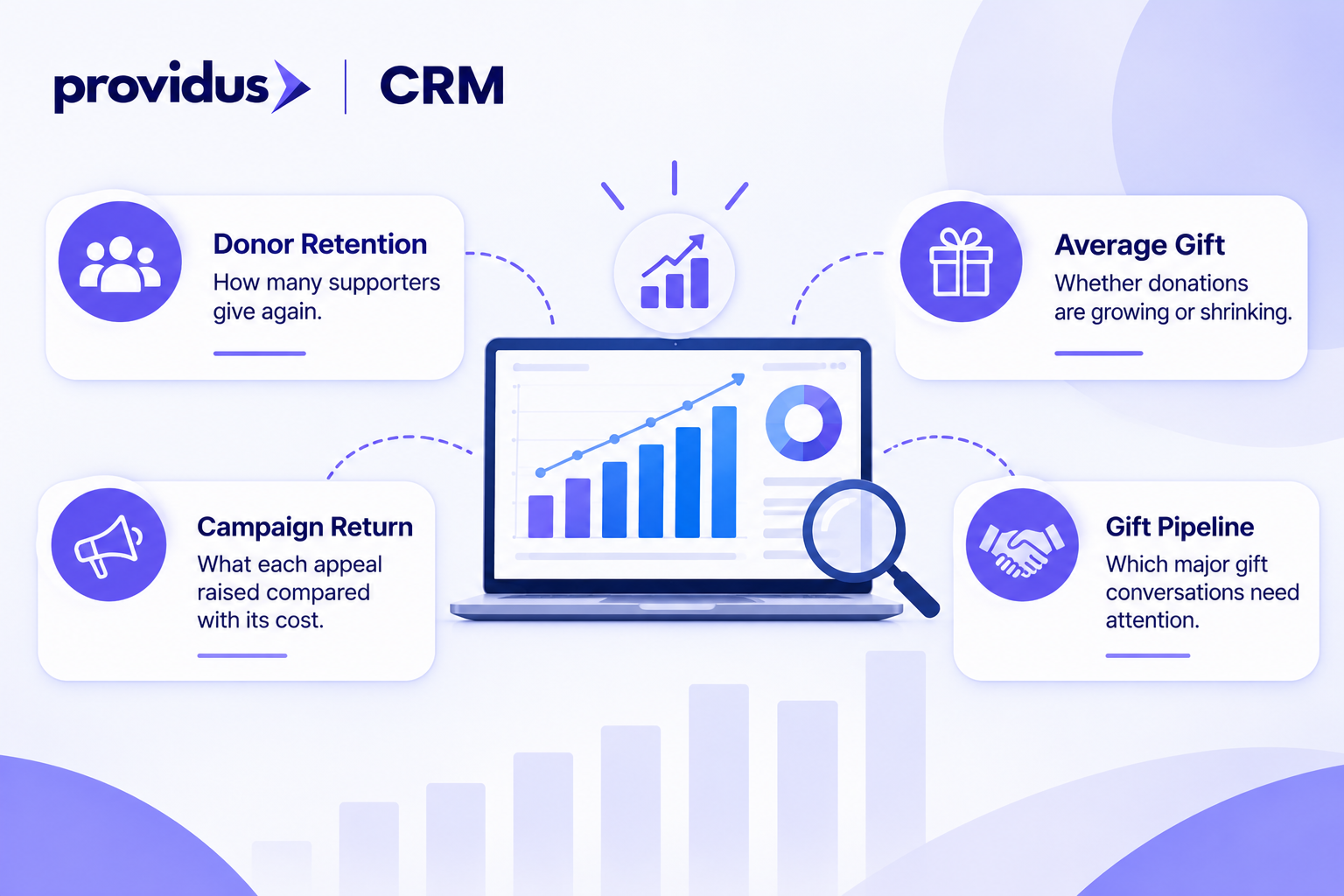
Once your data is well connected, a few tiny measures show whether giving is healthy or not.
- Donor retention: how many supporters give again.
- Average gift: whether donations are growing or shrinking.
- Campaign return: what each appeal raised compared with its cost.
- Gift pipeline: which major gift conversations need attention.
How Can Your Charity Get Started?
A calm but step by step approach works best. There are four steps mentioned below that will help you get started.
- Define your giving goals, such as growing regular donors or winning more major gifts.
- Clean your supporter data and plan a careful move with Salesforce migration services.
- Connect your donation platform, email tool, and payment provider through Salesforce integration services.
- Build simple dashboards, train your team, and review results every month.
If you follow these steps, it will keep the project practical and quite easy for staff to adopt.
Talk to a Certified Salesforce Partner
Are you planning a giving programme that scales? ProvidusCRM is a certified Salesforce partner, and our consultants map your fundraising process first and, after this, deliver it through our Salesforce Implementation Service.
Book a conversation to discuss your objectives, budget, and timeline.
Conclusion
Salesforce Philanthropy starts with a generous giving model and practical tools that help charities build lasting supporter relationships. The 1-1-1 promise opens the door, while clear goals, clean data, and careful setup make the platform work day to day. So, if you are ready to turn giving data into stronger relationships, start small, plan carefully, and mainly choose a partner who understands UK charities well.
Frequently Asked Questions
1. Can small charities use Salesforce without a developer?
Yes, most day-to-day tasks use point-and-click tools, though a partner helps with initial setup.
2. Does Salesforce help with Gift Aid records?
Yes, Gift Aid details can be tracked with the right configuration or an AppExchange add-on.
3. Is supporter data safe under UK GDPR?
It can be, provided permissions, consent records, and retention rules are set up correctly.
4. How long does a first setup usually take?
Simple setups can take a few weeks, while complex projects take longer depending on data.
5. Can staff use Salesforce on their phones at events?
Yes, the mobile app lets teams view and update records in the field.