

Many small to mid-sized organizations fly under the radar, thinking they aren't big enough targets for hackers. Criminals see nonprofits as high-reward, low-risk opportunities, assuming that under-resourced IT teams will not detect or block their intrusion attempts.
Research shows that 27% of nonprofits are hit by cyberattacks, exposing donor and financial data to high-stakes threats. Even a single breach can stall operations and vanish years of built-up credibility overnight.
Therefore, protecting your donor data is both a moral and technical necessity. Effective charity data security starts with acknowledging that your data, no matter the size of your donor list, is a high-value asset. This Nonprofit Cybersecurity Guide highlights how nonprofits can protect donor data through practical measures that strengthen Donor Data Protection and build lasting supporter trust.
Encouragingly, cybersecurity for nonprofit organizations does not require enterprise-level budgets. Smart habits such as enabling multi-factor authentication, applying regular software patches, and strengthening staff awareness can significantly improve security across nonprofit systems.
Don't let donors feel their data is being compromised. Here is how to build a digital fortress to protect your reputation and keep sensitive information associated with donors secure:
Common Cyber Threats Nonprofits Face
Since charities have limited security, store valuable donor information, and are prone to human error, they are quite attractive entry points for cybercriminals. To stay safe, they should be fully aware of existing types of digital threats.
Each type of breach targets a different vulnerability: technology, processes, or people. Let's review the key risks you must know about to create a safer digital environment for staff and beneficiaries alike.
- Phishing Attacks: Attackers send emails that appear to come from trusted sources such as donors, partners, or internal team members. These messages often create a sense of urgency, prompting staff to click malicious links or share login credentials.
- Ransomware Attacks: This involves malicious software that locks your files or systems until a payment is made. For nonprofits, this can disrupt operations, delay campaigns, and even halt donor communications entirely.
- Credential Theft: Using simple or repeated passwords across multiple platforms creates easy access points for hackers. Cybercriminals often use automated tools to guess passwords or exploit stolen credentials from other breaches.
- Unsecured Networks: Accessing systems through public or poorly secured Wi-Fi networks can expose sensitive data to interception. This is especially risky for remote teams or staff working from different locations.
- Malware & Spyware: These enter systems through downloads, email attachments, or compromised websites. Once installed, it can steal data, monitor user activity, or damage systems without immediate detection.
- Insider Threats: Not all threats come from outside the organization. Employees, volunteers, or contractors with access to sensitive data can unintentionally or deliberately cause breaches.
- Outdated Systems: Failing to update software leaves known vulnerabilities open for exploitation. Hackers often target outdated systems because they are easier to penetrate.
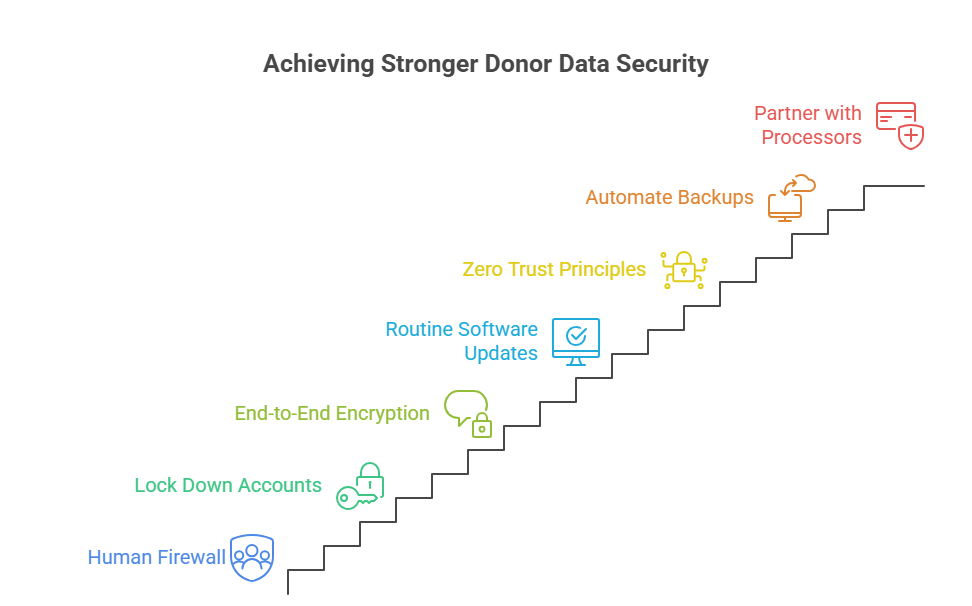
Key Measures for Stronger Donor Data Security
Besides a technical glitch, a data breach is a profound betrayal of the people who believe in your cause. Supporters share their hard-earned money and trust us to steward it well. If that data falls into the wrong hands, the damage to your reputation can take years to repair.
Luckily, you don't need a Fortune 500 budget to fortify your organization; simple, proactive measures are possible even with a small budget. Just staying proactive and promoting a resilient culture will solve many of your problems.
Based on our experience in Salesforce consulting, we have outlined the most effective Cybersecurity for NonProfits practices your charity should apply:
1. Building a Human Firewall
Every change starts with yourself. First of all, train your team to identify sophisticated phishing emails and avoid clicking on suspicious attachments. This is because human error is and will remain the biggest gateway for hackers.
Having a well-trained team at the back will be the strongest line of defense. Don't just treat the cybersecurity of your charity as a one-time IT lecture. Weave it into your weekly updates and keep in check with the latest threats. Simply put, vigilant staff who know how to spot scams will result in a nearly impenetrable defense system.
2. Lock Down Accounts
Don't expect data protection with guessable passwords like JOHN123 or maybe 987654321.
It's not enough to keep a determined hacker at bay. There should be a strict policy within your organization requiring complex, unique passwords. For added security, enable Multi-Factor Authentication (MFA) on every account.
Furthermore, you can add a different form of verification, like a thumbprint or a temporary code sent to a secure app. No matter if a password is stolen, it keeps the attacker away, and the account remains locked.
3. End-to-End Information Encryption
Think of encryption as a secret code that renders your data useless to anyone without the specific key to read it. You must ensure that all sensitive donor information is encrypted both while it is stored on your servers and while it is transmitted over the internet.
Regardless of what you are up to, whether you are sending an internal report or processing a new pledge, high-level encryption leaves no chance of breach. It ensures that intercepted data looks like gibberish to a thief.
4. Routine Software Updates
Digital thieves need just bugs or vulnerabilities inside your software systems to acquire unauthorized access. They keep hunting for it. If you want to stay a mile ahead of them, immediately address any existing security patches. Check for software updates as soon as they become available. Setting your systems to update automatically removes the risk of forgetting a critical patch. This tactic in data breach prevention closes the doors that hackers use to slip into your network unnoticed.
5. Adopt Zero Trust Principles
A secure, tested backup acts as your last line of defence, keeping operations moving when everything else stops. As part of effective Salesforce nonprofit consulting, you should establish an automated backup routine that stores copies of your critical data in a secure, off-site, or cloud-based location. Test these backups regularly to ensure you can restore your systems quickly. This acts as a Plan B for your organisation, helping you minimise disruption and avoid permanent data loss.
7. Partner with Certified Payment Processors
Always use reputable third-party payment gateways that comply with the highest industry security standards, such as PCI DSS. With such secure systems, you ensure that sensitive credit card data never even touches your own servers. This will shift the heaviest security burden to experts who specialize in it.
Wrapped Up
Every email collected, every donation processed, and every personal detail provided to your charity is your responsibility. You can't rely on basic measures anymore. Apply the above cybersecurity practices, from staff training and systems updates, right away, to remain miles ahead of cybercriminals.
With strong charity data security, you will let donors feel confident sharing their information. Remember that cybersecurity is a complex and evolving field. Most organizations don't have in-house expertise to handle all of this. Don't wait for a breach. To ensure best practices are set up correctly from day one, consider a partner specializing in Salesforce Nonprofit Cloud implementation. They can conduct thorough vulnerability assessments, implement best practices, and provide expert support.