
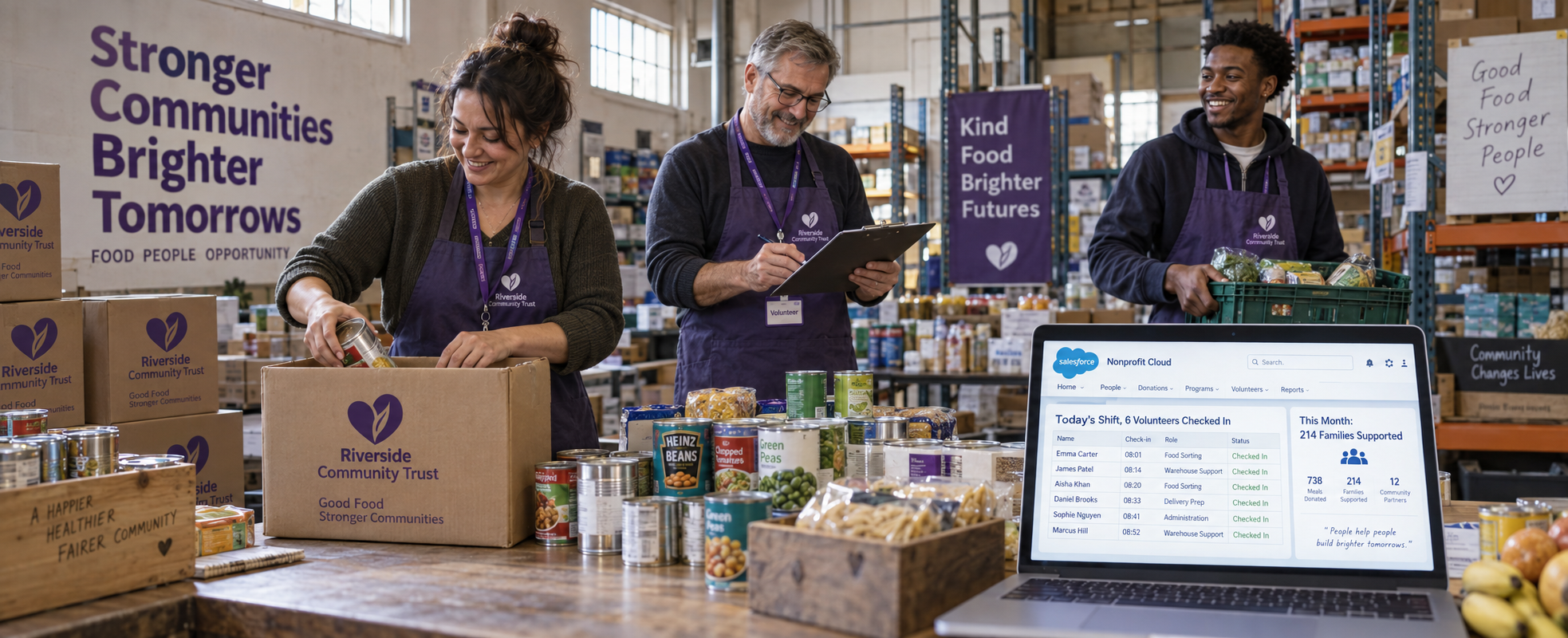
Each fundraising team asks this question: Is there a free CRM for nonprofits?
The honest answer is that multiple platforms do offer no-cost or freemium tiers that are built specifically for charities, and some of them are surprisingly capable for small teams, but free options always come with limited contacts, limited seats, and limited support.
Let's compare the real options so that you can choose it accordingly to your preference and not only your budget, because the decision carries the result.
Why Nonprofits Are Searching for a Free CRM?
Budget pressure is obviously the main element. According to the report of Charity Digital Skills 2025, 69% of UK charities cite strained organisational finances as their primary barrier to digital progress. This budgetary pressure directly impacts software evaluation and system selection
Moreover, another study from Bridgespan Group has found that only 14% of nonprofit technology budgets is spent on software itself, while the rest gets absorbed by services, other costs, and hardware. When the spending on software is already this thin, a free CRM for nonprofits becomes less of a nice-to-have and more it gets converted into a requirement.
This thing also explains why so multiple small organisations are still running their donor relationship through shared inboxes and spreadsheets. A spreadsheet actually costs nothing upfront, but it cannot flag lapsed donors and send reminders, but a genuinely free CRM for nonprofits closes this gap without even asking for a budget, and this is the reason why searching for one has now become so common across multiple sectors.
What "Free" Actually Means in CRM Software?
Comparing the platforms helps to understand what vendors mean by free, but most fall into one of the three models.
Freemium tools cap the number of contacts, users, and also automated emails, then charge you once you outgrow those limits. This is the model that most commercial CRMs use to attract small organisations, even before upselling them later.
Donated enterprise licencing usually include programmes like Salesforce Power of Us, where Salesforce grants qualifying non-profits 10 free Enterprise Edition licenses. This provides access to full enterprise capabilities
Open-source platforms are basically free to install and run, but they carry the security, hosting, and maintenance work, normally through your own server or through a paid hosting provider.
None of these is free in the complete sense. Each basically shifts the cost somewhere else, whether that is in eligibility checks, a growth ceiling, or even technical resourcing. Understanding which model you are basically looking for matters more because it determines what breaks first when your organisation grows.
Free CRM For Nonprofits: Comparison Between The Options
Here are the five most recommended platforms for the purpose of comparison among them.
| CRM | Free Tier Limit | Nonprofit-Specific Features | Best Suited For |
|---|---|---|---|
| Salesforce Nonprofit Cloud | 10 donated Enterprise licenses (Power of Us) | Complete CRM, donor tracking, grant management | Growing nonprofits needing scalable data architecture |
| HubSpot for Nonprofits | Free CRM core (up to 40% discount on paid tiers) | Contact management, email marketing, pipelines | Small teams prioritising combined inbound marketing |
| Free edition of Zoho CRM | Free up to 3 users | Basic contact storage, standard fields | Micro-charities requiring basic contact tracking |
| Bitrix24 Free Plan | Free for unlimited users (storage capped) | Task management, internal comms, contact records | Volunteer-heavy operations needing project tools |
| Self-hosted EspoCRM | Unlimited (open-source / self-managed) | Fully customisable data model | Tech-capable teams requiring complete data control |
When Free Plans May Not Meet Requirements?
The limits hardly show up on day one, which is the main problem; they get surfaced once your organisation is already relying on that system. A free plan that's built for three users becomes a blocker the moment a fourth trustee or even volunteer needs login access.
Contact and storage limits behave the same way, silently filling as your donor list grows through impactful campaigns. Furthermore, support is also another quiet cost. Free tiers typically offer community forums instead of a person to call when a donation import fails. For the small team that is without in-house technical staff, this gap can eventually cost more time than the software itself.
When Should a Nonprofit Consider Upgrading?
The right moment to upgrade is hardly related to the size, but it is related to the complexity. If your team is manually recreating the reports that the system should generate automatically, or if duplicating the donor records, the free tier is costing you the time which it was supposed to save.
Multi-channel fundraising, Gift Aid tracking, grant management, and even integrated case work are the features that mostly force a move to a donated licence or paid platform.
Get Expert Help Moving Beyond a Free CRM
If your organisation is approaching this point, it is worth exploring what Salesforce Nonprofit Cloud actually offers through the Power of Us Programmer before even committing to a paid alternative.
Transitioning from free CRM tiers or spreadsheets to an enterprise data architecture requires careful mapping of donor journeys, Gift Aid compliance, and governance workflows. ProvidusCRM’s certified solution architects help non-profits utilise Salesforce’s Power of Us Program to build scalable, trustee-ready CRM environments. Explore our Salesforce Nonprofit Consulting Services to discuss your data strategy.
Conclusion
So now, is there a free CRM for nonprofits worth using? Yes, but the right one depends entirely on where your organisation stands today. A small three-person team or a fifty-strong charity chasing grant funding are not shopping for the same product.
Use the free tier that eventually matches your current complexity, not the one with the most generous-sounding features list.
Frequently Asked Questions
Can any charity apply for Salesforce's free nonprofit licences?
Only organisations with recognised charitable status in their country, verified through eligibility check of Salesforce can apply.
Is donor data safe on a free CRM plan?
Reputable providers apply the same security standards to free and for paid tiers, but always confirm data residency and backup policies directly.
Can I move my data later from a free CRM to a paid one?
Most platforms allow data export, but though field mapping between systems usually needs manual review.
Do free CRMs support UK Gift Aid claims?
Rarely by default, but Gift Aid tracking is typically a paid-tier or nonprofit-specific feature.
How many staff can realistically share one free CRM account?
This varies by platform, from three users on some freemium plans to ten free seats under Salesforce's Power of Us programme.