
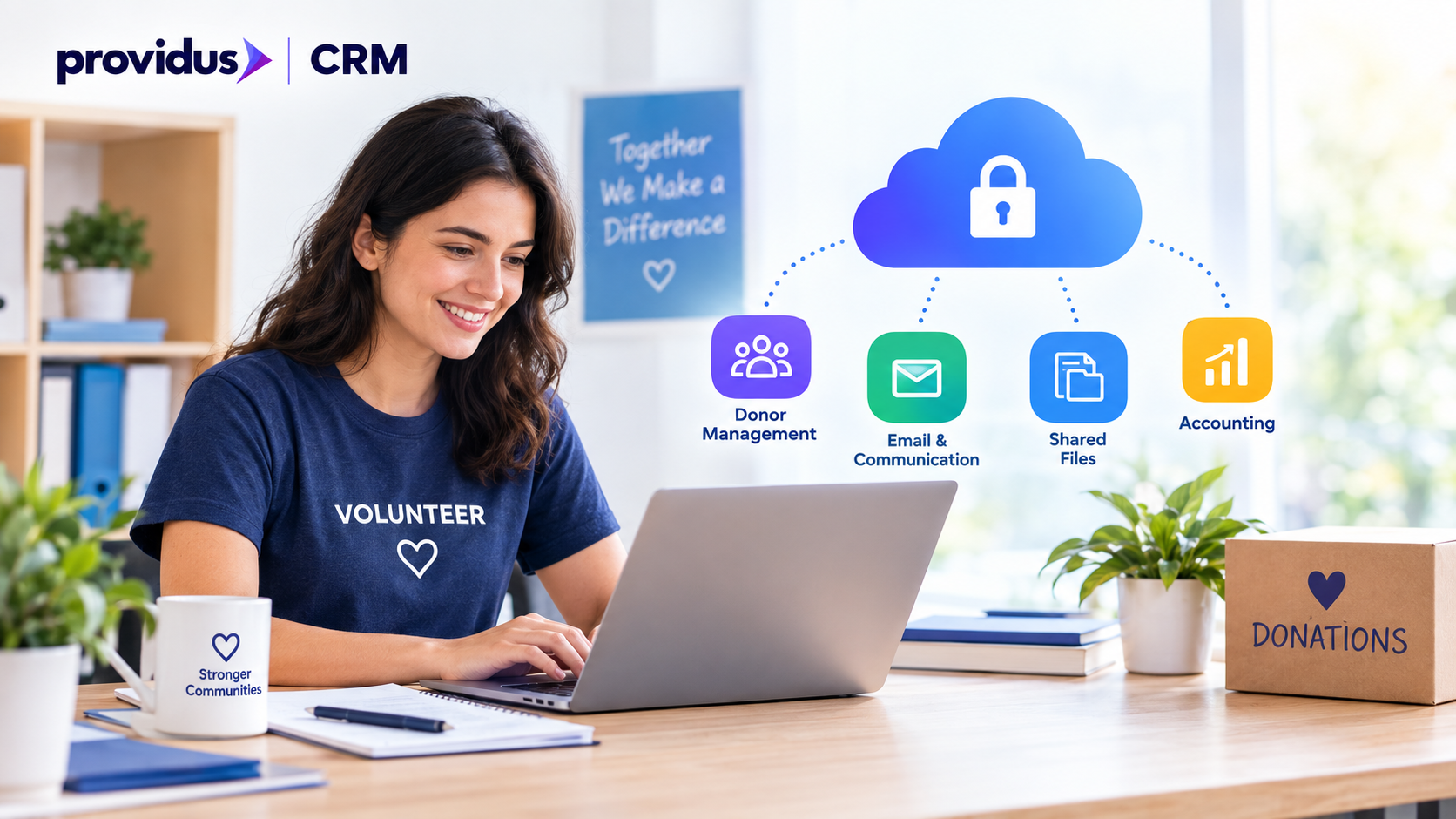
Imagine losing every volunteer contact, donor record, and even case file overnight because a single laptop broke. For multiple charities, this can be a real fear and sometimes a costly reality too. Charity cloud computing removes this risk by moving data from local machines into secure, always-available online systems.
It may sound technical, but the idea is simple and refreshing. Cloud computing is also silently reshaping how UK charities operate every day, whether they realise it or not. With the right technology and Salesforce Nonprofit Consulting Services, charities can improve data management, strengthen security, and streamline operations. Let’s understand why cloud computing has become essential rather than optional, and how your organisation can start using it.
What Is Charity Cloud Computing?
Charity cloud computing mainly uses storage and internet-based software instead of relying on a single server or office computer. Instead of saving files on one machine, your data lives on secure remote servers and is accessible from anywhere with an internet connection.
For charities, this includes cloud-based email, donor management systems, shared document storage, online accounting tools, and Salesforce integration. Volunteers and staff can log in from home, a mobile phone, or a community centre, while everyone works from the same up-to-date information.
This shift matters because charities often work across multiple sites, with volunteers joining and leaving and limited budgets for expensive hardware. It removes the need for costly servers, physical backups, and IT maintenance contracts, replacing them with simple subscriptions that can scale as the organisation grows or changes.
Why Does It Matter for UK Charities Right Now?
The case for charity cloud computing has now grown strong because of genuine cyber threats and measurable risks. As per the Cyber Security Breaches Survey 2025 by the UK Government, around three in ten charities, or around 61,000 organisations, have identified a cyber security breach or even an attack within the past year.
Many of these incidents targeted charities that were using unsupported and outdated software or storing sensitive data on unprotected local drives. Cloud providers, in comparison, invest heavily in automatic updates, encryption, and monitoring that basically most of the individual charities cannot afford to build alone.
Beyond the security aspect, there is also a simple resourcing reality. Charities are under constant pressure to do more with less, and in this context, IT budget that hardly take priority when frontline services need funding. Cloud computing mainly offers a path to access enterprise-grade technology without an enterprise-sized budget, and this is the reason why charity cloud computing adoption keeps climbing across multiple sectors.
What Are The Key Benefits For Your Charity?
Charities that can adopt cloud tools tend to report the same recurring advantages, but here is what this typically changes:
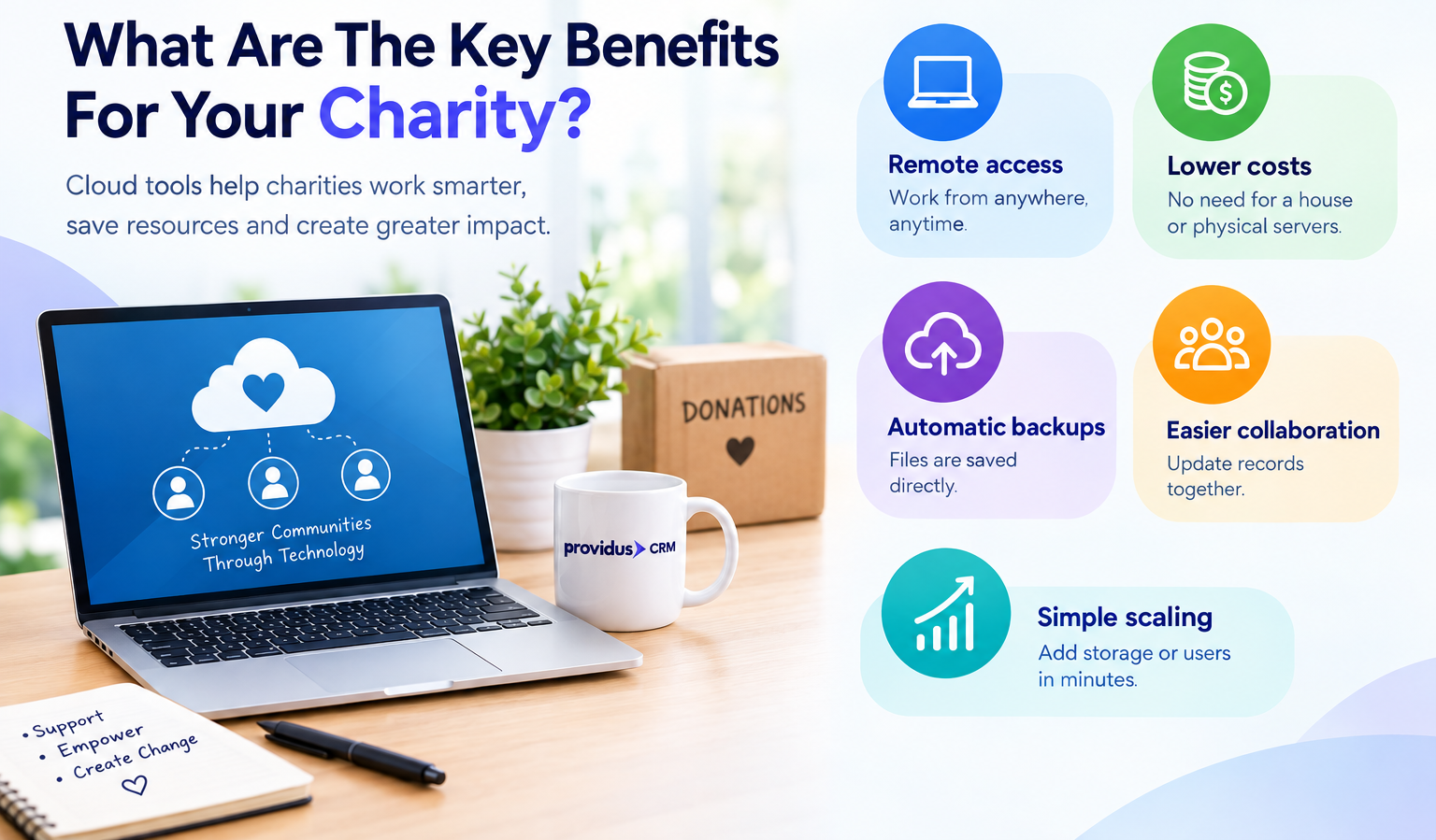
- Remote access, so volunteers and staff can easily work from anywhere, which suits part-time work and flexibility.
- Lower costs, since there is no need to buy a house or main physical servers.
- Automatic backups, since files are directly saved.
- Easier collaboration, as multiple people can easily update the same spreadsheet and donor record.
- Simple scaling because adding new storage or users can take minutes.
Together, these benefits can explain why charity cloud computing has moved from a good-to-have to a genuine operational necessity, especially for the teams that are handling multiple responsibilities.
What Are The Tools That Charities Normally Use?
You might be relying on some form of it without even labelling it. Some of the common examples include:
- Supporter and donor management systems such as Salesforce Nonprofit Cloud.
- Calendar and Cloud email tools, such as Google Workspace or Microsoft 365.
- Payroll software and online accounting.
- Video conferencing tools for training sessions and remote meetings.
- Cloud-based storage for photos, shared documents, and case files.
Each of these mainly replaces a task that once needed physical infrastructure or even in-person coordination.
Keeping Donor Data Safe In The Cloud
Data protection is basically one of the biggest concerns charities normally raise before even adopting cloud systems. Research from Charity Digital has found that nearly a quarter of small charities 24% reported of having a non existence cyber security protection in 2025.
This gap actually tells what well-configured cloud systems are designed to close, through controlled user permissions, encrypted storage, and continuous monitoring that a small in-house team cannot replicate.
None of this removes the risk factor, but charity cloud computing does shift responsibility form most of the technical layers of protection onto specialists whose job is to keep the data safe.
How To Choose The Right Cloud Provider?
Not every provider understands the pressures mostly charities face. Choosing the wrong one can lead to a system that won’t be impactful. So, when you are evaluating providers, you should look for.
- Clear and upfront pricing with no hidden fees.
- Direct experience supporting UK charities, not only general businesses
- Strong references from similar organisations in the sector
- Discounted nonprofit licensing because major platforms offer reduced rates only for registered charities.
Getting this choice right will save you from frustration, considerable time, and money later. This aspect makes the difference between a smooth rollout and one that silently stalls.
Ready to Move Your Charity to the Cloud?
Understanding the theory behind charity cloud computing is one thing, but getting the setup right, especially related to user permissions, data protection, and staff training, is basically where most charities need support, and this is the point where a specialist partner comes in.
Transitioning to the cloud requires robust data architecture, user permission mapping, and change management. ProvidusCRM partners with UK non-profits to design secure, compliant Salesforce Nonprofit Cloud environments that protect donor data and streamline service delivery. Explore our Salesforce Nonprofit Consulting Services to discuss your cloud migration strategy with a solution architect.
Conclusion
Charity cloud computing is no longer a luxury that is reserved for large organisations with only dedicated IT departments, but it is a practical and also affordable way for charities of every size to reduce costs, protect data, and also let staff work from wherever they need.
The charities getting the most value from cloud computing are the ones that are treating it as a habit, not as a project. Starting from small and building regularly is far more impactful and sustainable than attempting to change everything at once.
Frequently Asked Questions
1. Is charity cloud computing suitable for very small charities with no IT staff?
Yes, most cloud providers offer guided setup and ongoing support designed for teams without in-house IT expertise.
2. Does moving to the cloud mean losing control over sensitive donor data?
No, charities retain full ownership of their data, while the provider simply hosts and secures it.
3. How much does this typically cost a small charity?
Costs vary by provider, but most work on affordable monthly subscriptions rather than large upfront investments.
4. Can charities switch cloud providers later if their needs change?
Yes, most systems allow data export, though switching is easier when data is kept well organised from the day one.
5. Is staff training required before using cloud systems confidently?
A short training session is usually enough, since most cloud tools are designed for non-technical users.