
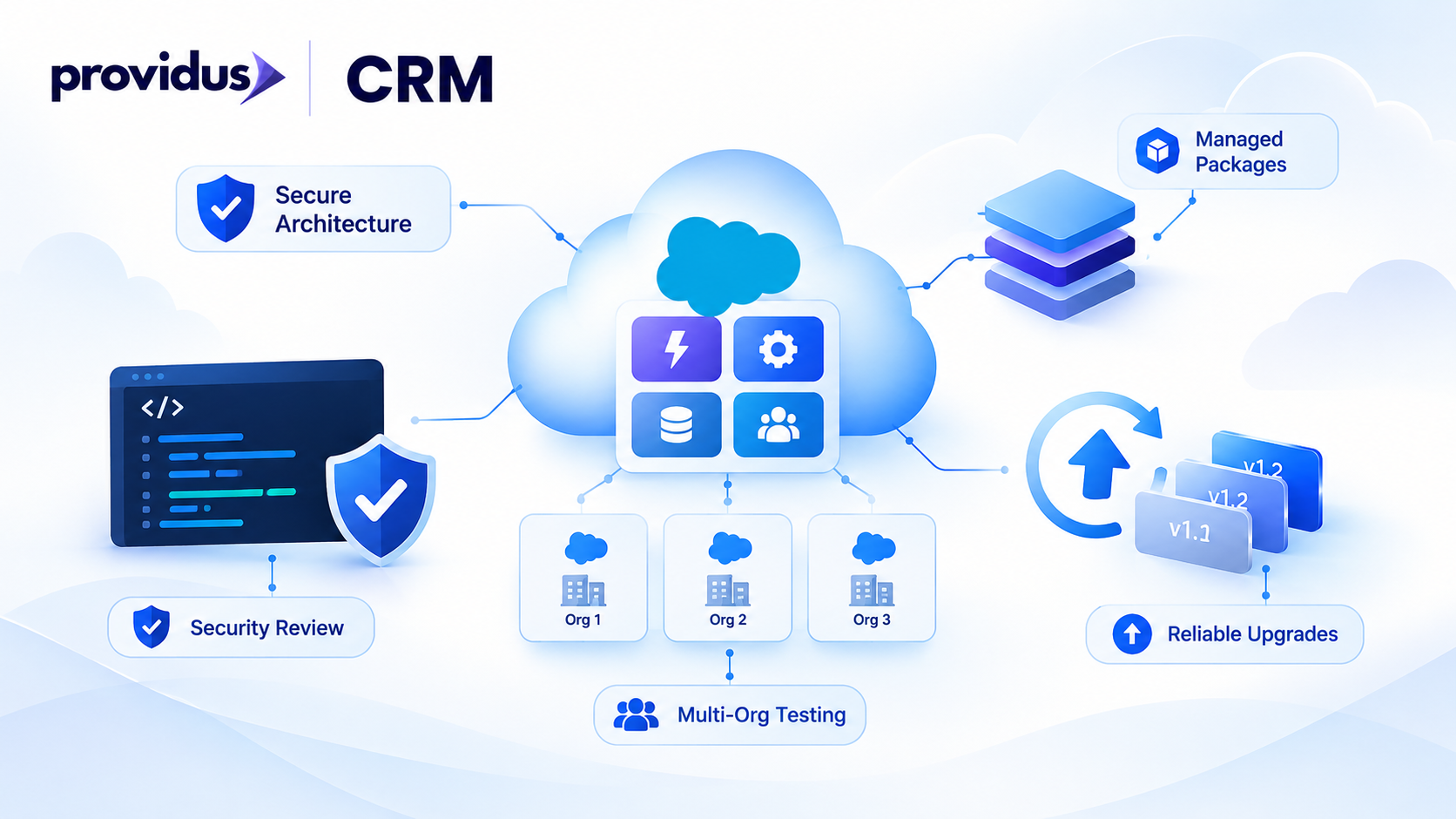
Building a successful product for the Salesforce AppExchange requires far more than writing clean Apex or Lightning Web Components. A functional application can easily fail in the marketplace due to brittle multi-tenant architecture, unhandled governor limits, poor upgrade paths, or security vulnerabilities identified during formal submission.
The scale of the marketplace makes this element more important and relevant. Research from MIT CISR has shared that AppExchange had more than 7,000 apps from around 4,500 partners in 2023, and this explains how much competition developers now face when they bring a new solution to the market.
This is the reason why successful AppExchange app development needs developers to think ahead about features. The application must work reliably across supported, controlled upgrades, customer orgs, follow Salesforce security expectations, and communicate clear business value before customers get it installed.
What Makes AppExchange Development Different?
AppExchange development actually combines Salesforce engineering with product development. This distinction affects architectural decisions because the application should operate across different customer configurations, not just one controlled Salesforce environment.
Before the development phase starts, define the supported Salesforce integration boundaries, edition, data dependencies, required features, and assumptions about the customer environment. Commercial solutions typically use Second-Generation Managed Packages (2GP), which protect intellectual property, enforce namespace isolation, and enable automated versioning and patch deployments.
The package should also minimise dependencies on specific customer configuration. Avoid profile names, hard-coded IDs, URLs, or even organisation-specific assumptions because these can easily create installation and upgrade problems in the customer's environment.
Guide for Salesforce AppExchange App Development: Start With Product Architecture
An impactful and reliable guide for Salesforce AppExchange app development should begin with product architecture, not with Apex development. Firstly, define the business problem, target users, data model, integrations, security requirements, and the expected customer journey.
A structured architecture eventually separates business logic from presentation and configuration. Use configurable and metadata settings where they are justified so that customers can adapt the application without modifying its underlying code.
Along with this, upgrade planning should also happen at this stage, new releases should preserve customer data, and it should also avoid destructive changes wherever they are possible. If custom objects, fields, or permissions change in future releases, establish a controlled migration strategy early or consult with experienced Salesforce customisation services to avoid introducing technical debt into customer orgs.
How to Build an AppExchange App?
So, how to build an AppExchange app? Take a start by defining a relevant customer problem instead of creating a huge collection of multiple features. Convert the problem into data requirements, functional requirements, user stories, integration requirements, and also measurable acceptance criteria.
Along with this, build the initial version in a dedicated development environment and then select technologies according to the specific requirements. Apex, Flow, Lightning Web Components, APIs, and configuration should be defined as a separate role, not just because they exist.
Testing must go ahead of individual feature validation. Test permissions, bulk processing, governor limits, sharing behaviour. API failures, error handling, and realistic data volumes.
What Is The Process Of Salesforce AppExchange Development?
The most asked question, what is the process of Salesforce AppExchange development? Let’s divide the answer into pointers.
- Discovery.
- Architecture.
- Development.
- Testing.
- Security Preparation.
- Packaging.
- Review,
- Listing,
- Publication
- Ongoing Maintenance.
Discovery explains the target users and customer problem; architecture converts those requirements into a secure technical design, while development and testing verify that the application behaves as it is supposed to under realistic conditions.
Moving further, security preparation should start before submission. The current Salesforce security-review guidance explains that developers may be required to provide usage documentation, data-flow information, scanner reports, feature details, and access to the components and environments required for assessment.
Steps of Salesforce AppExchange App Development
- Discovery & Requirements Scoping: Define target user personas, core business problems, data models, third-party API dependencies, and target Salesforce Editions.
- Product Architecture & Schema Design: Design a modular schema using 2GP managed packaging principles. Separate core logic into service layers and decouple UI components using Lightning Web Components (LWC).
- Test-Driven Development (TDD): Write Apex classes, LWCs, and Flows following secure coding guidelines. Ensure Apex unit test coverage exceeds 85% with realistic bulk scenario testing.
- Rigorous Multi-Org Testing: Test package installation across non-admin user profiles, restricted scratch orgs, and multiple platform editions to identify missing permissions or hardcoded assumptions.
- Security Pre-Scanning & Vulnerability Remediation: Run the Salesforce Code Analyzer and Checkmarx static code scanners. Document legitimate false positives and resolve all high-severity vulnerability flags.
- 2GP Packaging & Versioning: Create second-generation package versions via Salesforce CLI (sf package version create), verifying installation dependencies and upgrade paths.
- Salesforce Security Review Submission: Submit the package version via the Partner Console, providing test environment credentials, data flow diagrams, and scanner reports.
- AppExchange Listing Creation: Construct your commercial AppExchange listing, including marketing collateral, pricing tiers, installation documentation, and support contacts.
- Publication & Lifecycle Maintenance: Publish the approved listing, manage subscriber org licenses via the License Management App (LMA), and issue push upgrades or bug fixes as needed.
Best Practices of AppExchange App Development
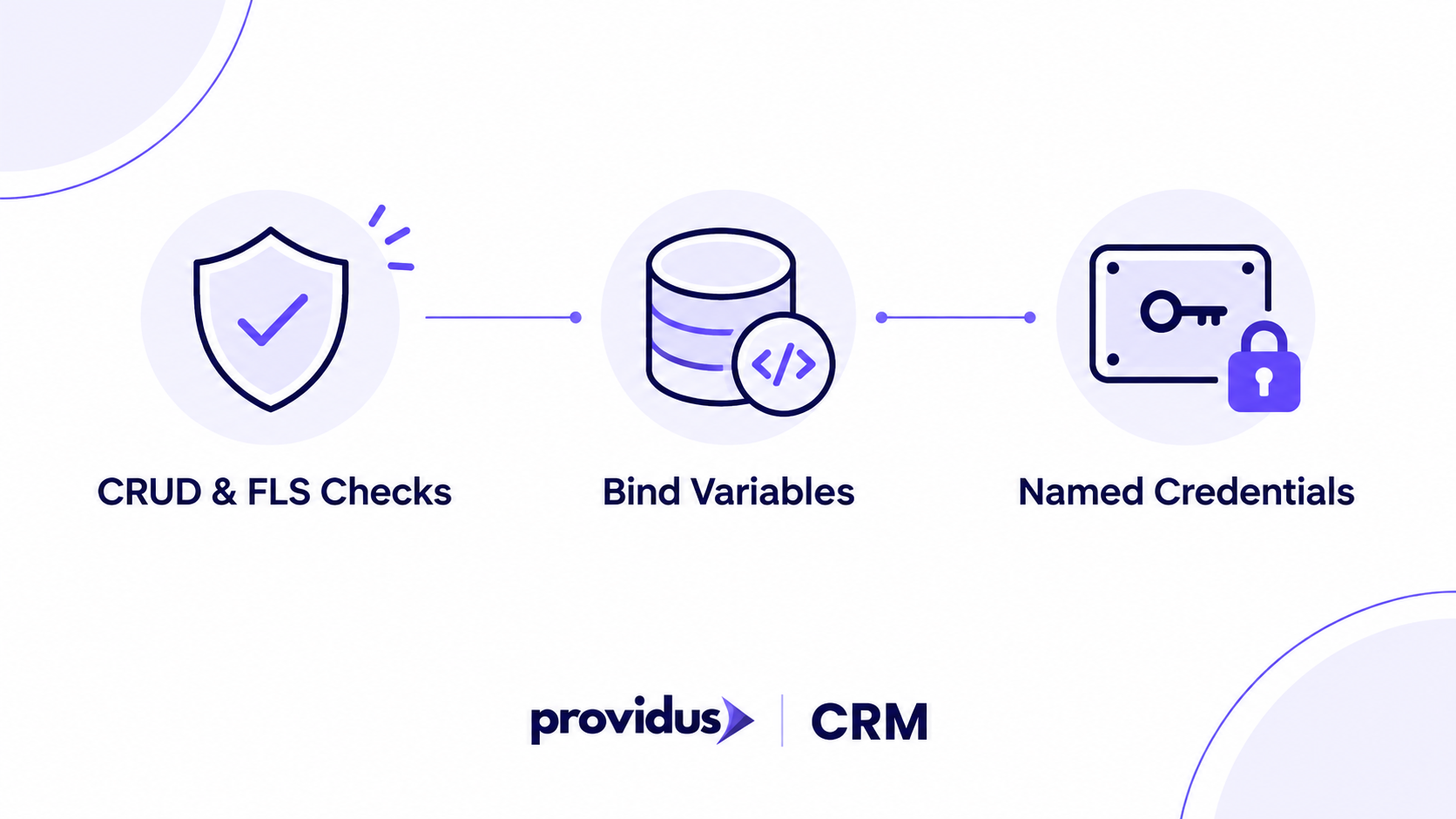
Enforce CRUD and FLS Checks: Always check Object-Level Security (CRUD) and Field-Level Security (FLS) in Apex using WITH USER_MODE or Security.stripInaccessible().
- Prevent SOQL/SQL Injection: Use static queries with bind variables or sanitize dynamic inputs using String.escapeSingleQuotes().
- Avoid Hardcoded Secrets: Never embed API keys, OAuth secrets, or passwords directly in code. Use Named Credentials or External Credentials for secure endpoint authentication.
Never hardcode API credentials or sensitive secrets in source code. Utilize Named Credentials or Protected Custom Settings to authenticate external services securely and prevent data exposure.
Moving ahead, testing should also use realistic permission sets and user roles. Developers who test only with administrator access can skip the problems that customers usually encounter, especially when restricted users install or operate the application.
Data-flow documentation is another important part. Clearly identify what data the application updates, creates, reads, transmits externally, deletes, or stores. This step makes the security boundary easier to assess before submission.
Salesforce AppExchange App Security Review
The Salesforce AppExchange app security review is actually a formal assessment for applicable solutions prior to the market launch. Salesforce explains that managed packages, Salesforce Platform API solutions, and also Marketing Cloud Engagement API solutions require review under its current publishing guidance.
Preparation should incorporate the Salesforce Code Analyzer and Checkmarx static code scanners. Document legitimate false positives and resolve all high-severity vulnerability flags prior to official submission. Salesforce always asks developers to explain legitimate scanner false positives, but only if it is applicable.
Importantly, security review should not be treated as the point from where security begins, but access control testing, secure coding, dependency management, vulnerability scanning, and regression testing should also happen throughout development.
Salesforce AppExchange App Publishing Process
The process of Salesforce AppExchange app publishing goes beyond submitting a package. The listing must clearly communicate the purpose of the application, supported Salesforce products, features, pricing, documentation, and customer support information.
The publishing guidance of Salesforce defines that partners use the Partner Console to connect technologies, start applicable security reviews, manages listing ad submit listings for approval.
So, before publication, validate the complete customer journey, which actually starts with installation instructions, configuration steps, documentation, licensing, support routes, and version information. This should be ready before customers encounter the listing.
What Are The Requirements For A Salesforce AppExchange Developer?
In this discussion, developers need a practical understanding of Salesforce architecture, APIs, Lightning Web Components, data modelling, secure coding, permissions, testing, deployment, and version control.
Further, product thinking is equally important. Developers now need to anticipate customer configuration differences, installation scenarios, upgrades, documentation requirements, and support issues as compared to just designing for the development environment.
Certifications can easily demonstrate platform knowledge, but the practical production experience becomes most valuable when an application contains complex integrations, sensitive data, licensing requirements, or demands security controls.
Cost of AppExchange App Development
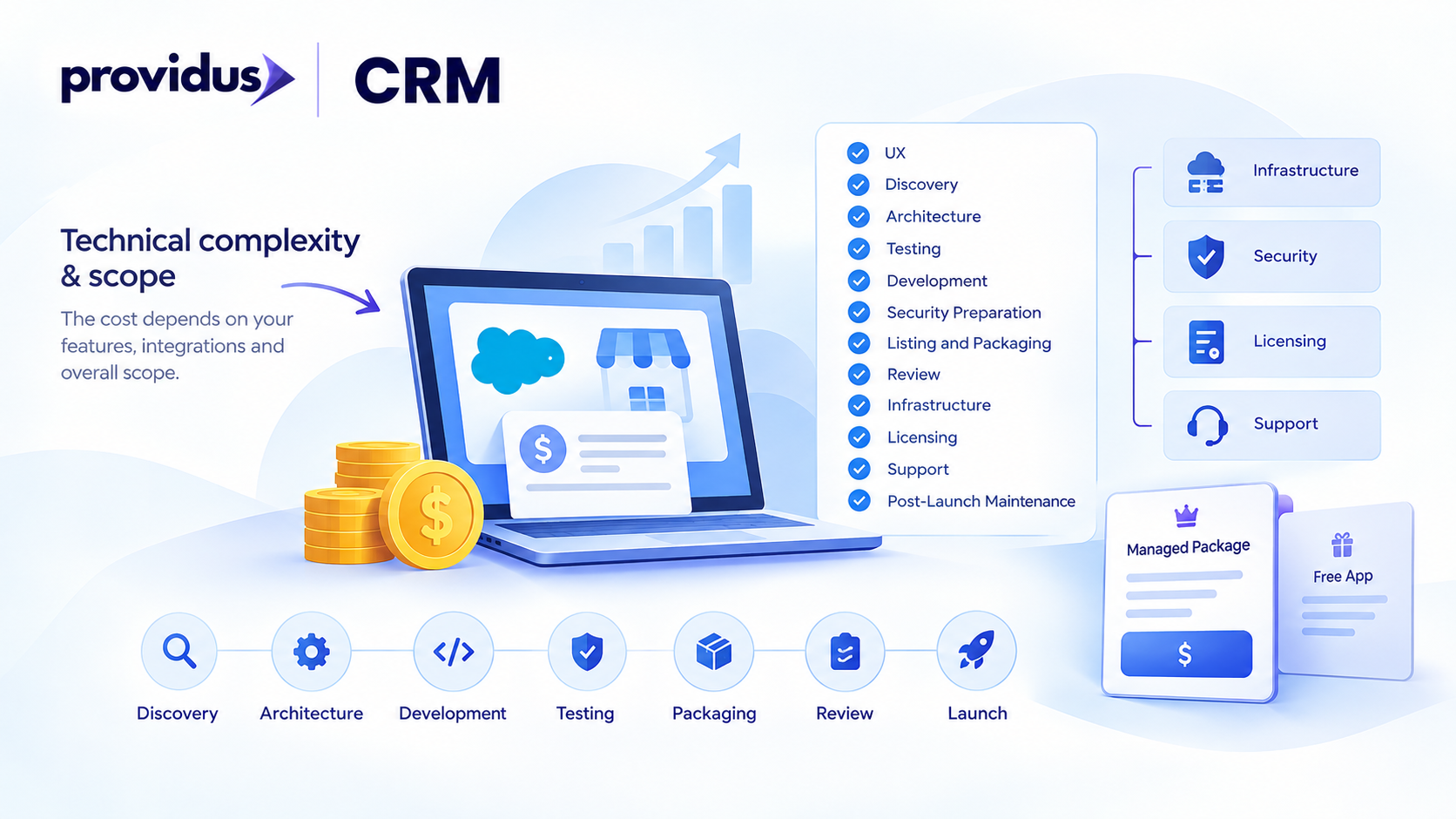
The cost depends primarily on technical complexity and scope rather than a fixed marketplace price. A small Salesforce-native utility may require significantly less engineering as compared to a multi-tenant application with external APIs, analytics, advanced security, licensing, and complex upgrade requirements.
A realistic estimate should always cover:
- UX.
- Discovery.
- Architecture.
- Testing.
- Development.
- Security Preparation.
- Listing and Packaging.
- Review.
- Infrastructure.
- Licensing.
- Support.
- Post-Launch Maintenance.
The commercial model also influences architecture. A paid managed package may require subscription logic and licensing, while a free application may prioritise adoption and also support economics.
Why AppExchange Projects Fail Before They Reach Customers?
One of the warning signs is building too much even before validating the actual problem of the customer. Teams should establish the target buyer, use case, competitive position, and also expected adoption before committing significant resources to the first release.
Security is the second most common risk, but it should be treated as a final inspection. Issues involving insecure APIs, injection, access control, sensitive data exposure, or even unsafe client-side behaviour are usually easier to address during the architecture and development than immediately before submission.
Lastly, upgrade planning is another overlooked area. A package may work fine in its first release, but it can cause customer disruption later if a new version changes dependencies, data structure, permissions, or integration behaviour without a controlled migration strategy.
How Can ProvidusCRM Support AppExchange App Development?
ProvidusCRM treats AppExchange initiatives as full-scale product engineering projects. Our specialized Salesforce development services cover managed package architecture, API integrations, security review preparation, and automated release management.
The development process begins with design and analysis before moving through release. This strategy helps the team to identify architectural and technical issues before they become expensive production problems.
So, if your organisation is planning an AppE Exchange product, get connected with ProvidusCRM’s Salesforce development team related about your application scope, security model, integration requirements, and release roadmap. An early technical assessment will eventually help you to establish whether the proposed solution is ready for marketplace development.
Conclusion
AppExchange app development succeeds when the developers treat the application as a product that should survive the real environments of customers rather than simply as a package that passes a build.
The impactful approach starts with a defined business problem, prepares thoroughly for review, follows secure architecture, tests realistic scenarios, and than it continues with disciplined versioning and it also supports post-publication.
For teams that are planning a marketplace solution, the critical question is not simply whether the application can be built, but it is whether its packaging strategy, architecture, security model, packaging strategy and operating process are strong enough to support customers throughout the journey that will follow.
Frequently Asked Questions
1. Can an AppExchange app connect to external systems?
Yes, but with external data flows, authentication, security controls, and dependencies should be properly documented and designed.
2. Can an AppExchange app be built without custom Apex?
Yes, depending on the application's requirements, declarative Salesforce capabilities may handle some or all functionality.
3. How long does an AppExchange security review take?
Salesforce currently advises allowing time for the review process, but the actual duration can vary according to solution complexity and submission readiness.
4. Can an AppExchange listing be updated after publication?
Yes, publishers can update and manage their listings and release new solution versions through the applicable publishing process.
5. Does an AppExchange app need a managed package?
Not every solution uses the same distribution model, so the appropriate package type depends on the architecture and publishing requirements of the application.
6. Should security testing happen before development is complete?
No, security should be incorporated throughout testing, architecture, development, and the eventual submission process.